

Accelerating Digital Transformation in Hiroshima’s Oyster Aquaculture
Date Published:29 SEPTEMBER 2025

- Urgent need to migrate from R&D to a production-grade, public-facing infrastructure
- Mandatory compliance with strict utility-sector security standards
- Tight three-month deadline to align with the summer oyster seeding season

- Production launch achieved in mid-June, ahead of schedule, meeting fishermen’s requirements
- Same-day security audit clearance through Trend Micro solution implementation
- Stable operations and maintenance framework established through three-party collaboration
Oyster farming is a cornerstone industry in Hiroshima Prefecture. However, traditional natural seed collection has long been plagued by the unpredictable availability of larvae, making stable seedling procurement a persistent challenge for the industry.
To address this, the Energia Research Institute at Chugoku Electric Power developed “Kaki Navi,” a web application that leverages AI-powered image analysis to identify the optimal timing for seed collection.
As the project transitioned from a pilot phase to a full-scale public launch in 2025, the team faced two critical hurdles: meeting the rigorous security protocols required of a major utility company and deploying the entire infrastructure before the summer seeding season began. To address these challenges, Classmethod provided support for AWS environment implementation and security architecture.
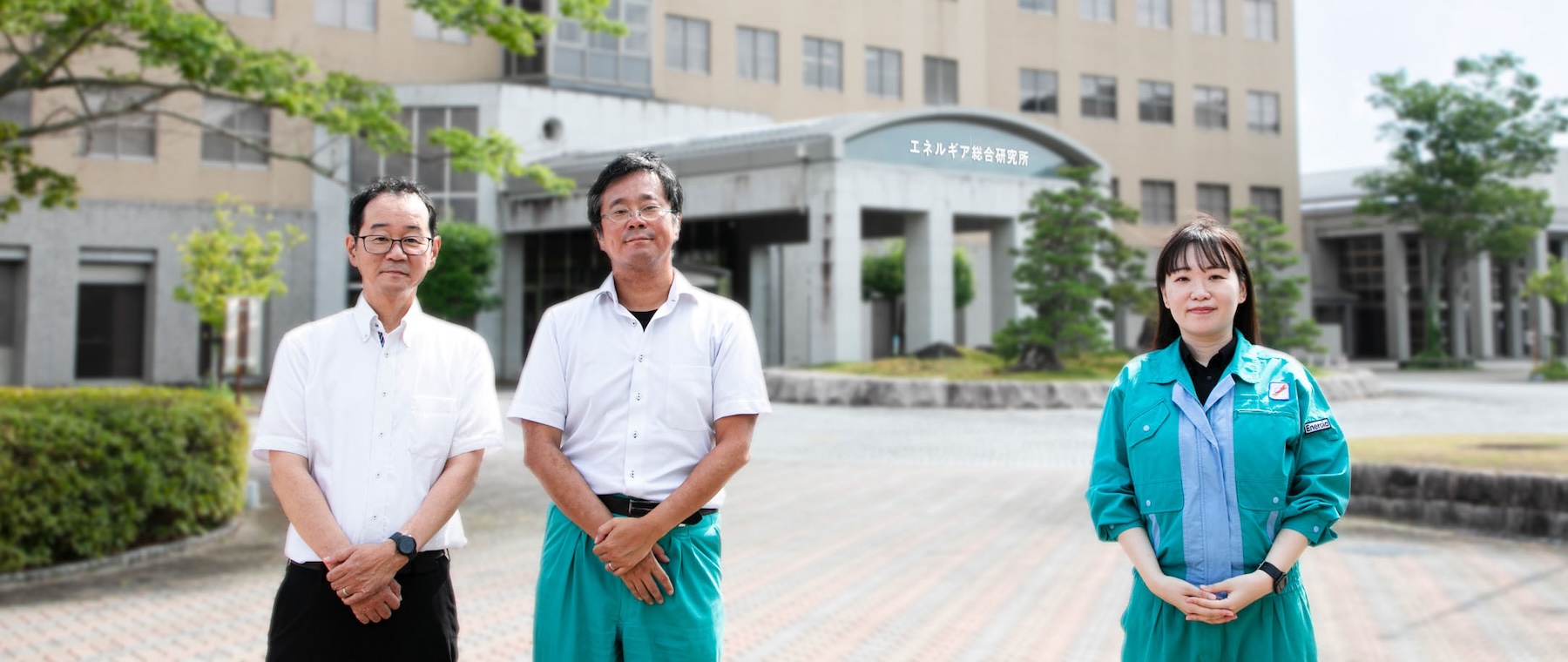
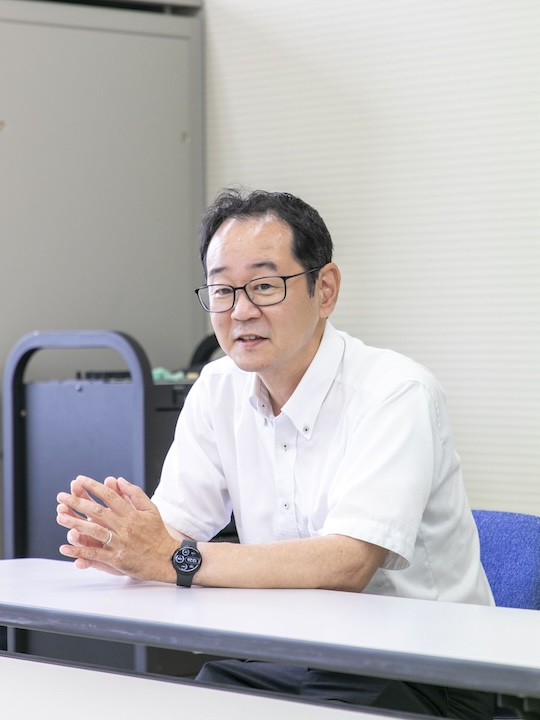
We spoke with project leaders Mr. Toshiharu Yanagawa, Mr. Tsukasa Yoshizaki, and Ms. Yurika Nishida about the impact of solving regional industrial challenges through rapid infrastructure deployment under tight deadlines.
Digital Transformation for Regional Industry: An Energy Provider’s Perspective
The project originated within the Chemistry and Biotechnology Group of the Energia Research Institute, which typically researches biological countermeasures for seawater intake facilities at power plants. Around 2017, as attention to AI technology intensified, the development of the web application “Kaki Navi” began as a new challenge.
“We were developing a kit to detect larvae via antibody testing to prevent fouling at our facilities,” explains Mr. Yanagawa. “While exploring how to automate this through image recognition, we realized the same technology could revolutionize oyster farming.”
Beginning in 2018, the institute joined the “Hiroshima Sandbox,” a prefecture-led demonstration project under the “Smart Oyster Farming IoT Platform Project,” to develop a high-precision AI model trained on over 1,000 images. This project was conducted in collaboration with multiple organizations such as the University of Tokyo, Sharp Corporation, NTT DOCOMO, INC., and Cecil Research Co., Ltd., and Chugoku Electric Power.
Starting in 2021, following demonstration trials at four fishery cooperatives within the prefecture, an application was developed that detects oyster larvae in approximately one minute per image and displays the results on a map, improving seed collection success rates.
Navigating Strict Security for Public-Facing Services
Building on these trials, the institute planned a full-scale roll-out in 2025. However, the shift from R&D to production introduced significant new requirements.
“Moving from R&D and limited demonstration trials to a service used broadly by the public meant we had to satisfy much stricter internal standards,” says Ms. Nishida. “We required a network configuration capable of safely handling internet-facing traffic and an operational design that ensured 24/7 stability during the critical seed collection window.”
Regarding the high security standards inherent to the utility sector, Mr. Yanagawa adds: “Any unintended data leakage, regardless of the content, directly impacts our corporate credibility. Our internal standards are exceptionally strict, and clearing them was an absolute prerequisite for launch.”
The project was also under immense time pressure.
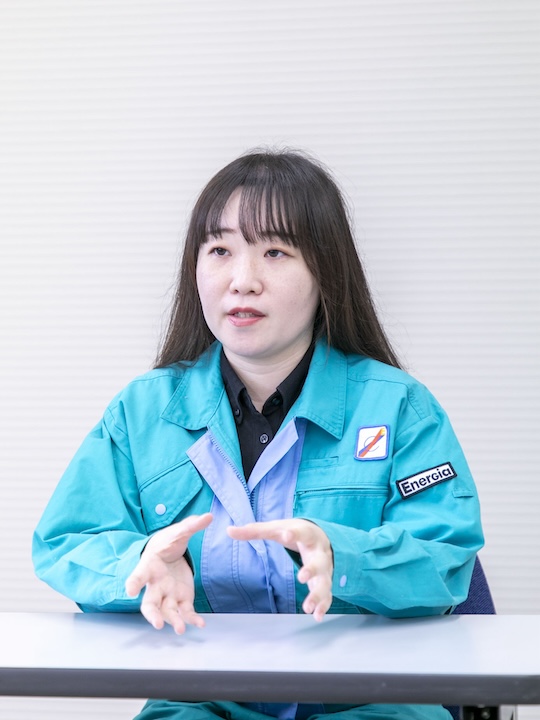
“Oyster seeding takes place in the summer, making a production launch by early July non-negotiable,” Ms. Nishida notes.
The demand was immediate; fishermen involved in the beta trials were eager to begin using the service as early as mid-June. “A delay of even one year would have caused fishermen who wanted to keep using the service to leave. It was important to gradually increase users while maintaining continuous usage,” Mr. Yanagawa emphasizes.
Under these circumstances, the institute consulted with Classmethod in March 2025 with the objective of completing a rapid environment build within a three-month window. This project necessitated a strict timeline, progressing from an April kickoff to a full production launch by early July.
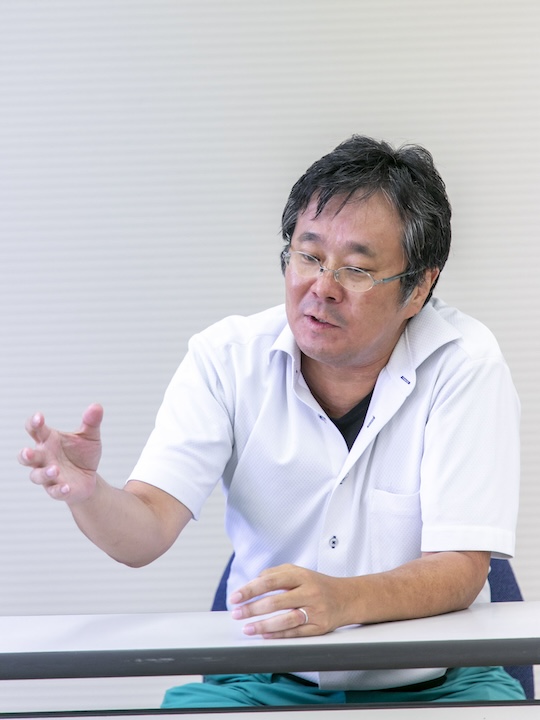
“Our group had no experience building public-facing services and lacked the know-how for managing AWS environments. We reached out to Classmethod with a genuine sense of urgency, unsure if such a tight turnaround was even possible” says Mr. Yoshizaki.
Classmethod delivered a proposal within weeks that balanced Chugoku Electric Power’s stringent requirements with reduced operational overhead, enabling the project to commence in April.
“The deciding factor was Classmethod’s commitment to a long-term partnership,” Ms. Nishida shares. “They didn’t just offer to build the environment; they committed to supporting our ongoing operational success.”
A Collaborative Project Balancing Speed and Quality
The project followed a three-party framework involving Chugoku Electric Power, their group systems company Enecom, and Classmethod. To maintain momentum, the teams used weekly meetings and Backlog for transparent communication. Classmethod ensured that every technical decision was backed by a clear explanation of the pros and cons.
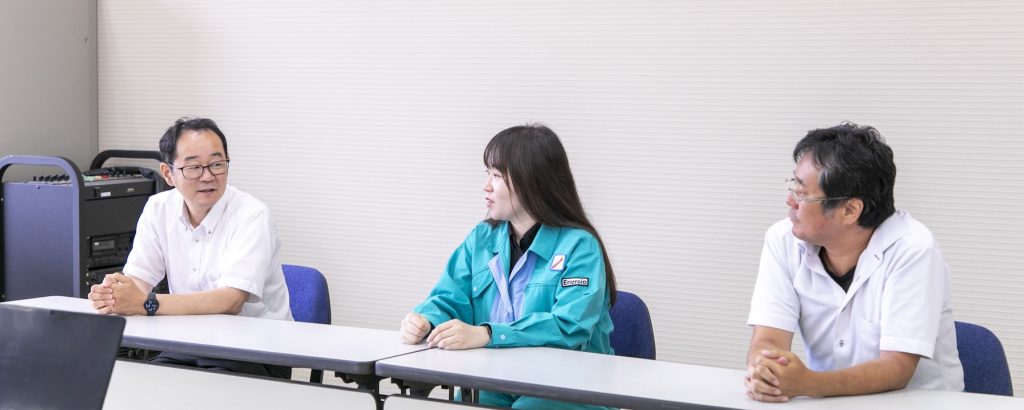
“When presented with multiple technical pathways, the team provided data-backed recommendations paired with comprehensive context. By articulating the strategic rationale behind each option, they empowered us to make high-conviction decisions. This transparent approach fostered a deep sense of security and alignment throughout the project lifecycle,” Ms. Nishida adds.
To fortify the infrastructure, the team implemented Trend Micro Cloud One for IPS/IDS (Intrusion Prevention and Detection), chosen for its proven track record on AWS and ease of operation. This approach addressed the essential requirements for a public-facing service—such as secure internet communications and continuous monitoring—creating an environment that fully complied with utility-grade security benchmarks.
Reflecting on the progress, Mr. Yoshizaki notes, “As the client, we were initially worried about the deadline. However, the process was smoother than we ever anticipated, and construction was completed ahead of schedule thanks to Classmethod’s precise management.”
Classmethod also provided extensive support for the internal security audit, organizing documentation that mapped specific technical countermeasures to each security requirement.
“By mapping specific countermeasures to each security requirement, the team provided a structured documentation framework that streamlined our internal review process. This clear visualization of technical implementations was instrumental in securing rapid approval from the information security department,” noted Ms. Nishida.
This meticulous preparation enabled the information department to grant approval on the same day as the audit, with only minor findings. With application testing also progressing smoothly, the team successfully accelerated the timeline, achieving a mid-June release that surpassed the original target.
Production Success and Future Outlook
By leveraging close collaboration between the three companies, the team successfully accelerated the environment construction timeline—completing it in just 2.5 months following the April kickoff. This efficiency allowed the project to beat its original three-month target.
“For a fisherman, the greatest challenge is the physical toll of traveling to a site and performing heavy seed collection work, only to return empty-handed,” says Mr. Yanagawa. “Delivering a reliable tool that directly increases their success rate is, therefore, incredibly rewarding.”
Currently, the “Kaki Navi” web application is seeing rapid expansion, centered in Hiroshima Prefecture with growing adoption in Miyagi and Okayama. By streamlining seed collection operations, the platform has delivered measurable results—reducing work time by one to two days per cycle while improving success rates. This impact is reflected in user feedback, with fishermen noting that the tool has become indispensable to their daily operations.
Looking ahead, the roadmap includes AI-driven larval emergence prediction, utilizing accumulated data to provide even more sophisticated seed collection support.
“Through this experience, we have established a blueprint for building secure, external-facing digital services,” concludes Ms. Nishida. “As an energy provider, we look forward to driving further digital transformation across regional industries.”
Born from the “Hiroshima Sandbox” demonstration project and refined through industry-academia collaboration, “Kaki Navi” received critical support from Classmethod for its AWS and security infrastructure ahead of its full-scale public launch.
Ongoing maintenance is now managed through a stable partnership between Classmethod Operations, Inc. and Enecom. As a vital piece of digital infrastructure supporting a core regional industry, the platform is positioned for continued evolution.