

Migrating K's Denki's 550-Store Retail Systems to the Cloud:
In-House AWS Operations to Accelerate Deployment and
Optimize Procurement Costs
Date Published: 06 OCTOBER 2025

- Faced excessive costs and idle resources tied to data center lease contracts
- Sought to build a cloud environment and transition toward in-house development
- Lacked internal AWS technical expertise

- Reduced costs through right-sized cloud resource allocation
- Resolved nearly 400 concerns and issues over four years of hands-on support
- Strengthened security by keeping pace with AWS updates and applying modern configurations
Founded in 1947, K’s Holdings Corporation operates more than 550 K’s Denki consumer electronics stores nationwide. Under its “Mid-Term Management Plan 2027,” the company lists “pursuing operational efficiency and revenue growth through DX” as a key initiative. When K’s Holdings decided to migrate its on-premises systems to the cloud, the team chose Classmethod to architect the AWS environment for its business systems and provide ongoing operations support. We spoke with Mr. Iizuka and Mr. Kurosu about the challenges behind this initiative and the results they achieved.
On-Premises Constraints: Cost and Resource Inefficiencies from Five-Year Lease Cycles
With more than 550 physical stores as of March 2025, K’s Holdings operates systems centered on a point-of-sale (POS) platform that captures sales data across locations for analytical use. Prior to this project, multiple systems resided in an on-premises environment where cost inefficiencies were becoming difficult to ignore.
The company leased server hardware on five-year contracts, but the process from hardware procurement and delivery through initial setup to going live took roughly a year on its own, extending the fixed-cost burden. K’s Holdings decided to migrate its business systems from on-premises to the cloud. AWS was selected for its leading market share in cloud infrastructure and the depth of available documentation and community resources.
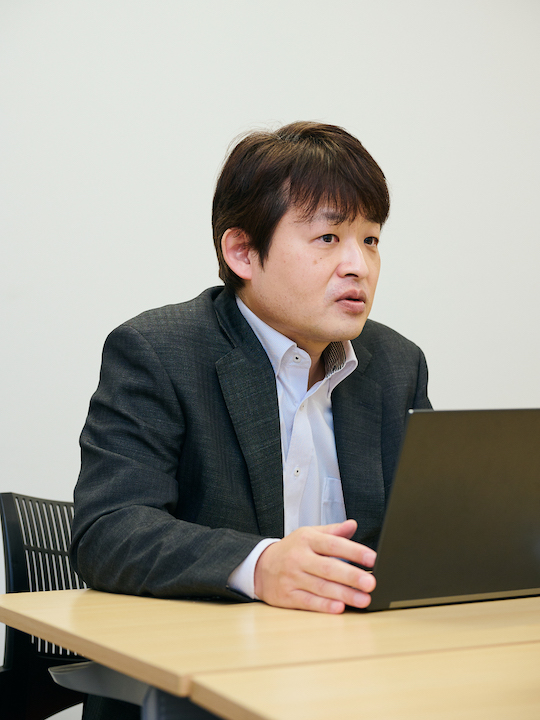
“With on-premises systems, we had to predict the specifications we would need five years into the future, up to the end of the lease, and procure hardware accordingly,” Mr. Iizuka said. “Immediately after deployment, systems would be running at well below the specs we’d paid for; this just felt like a waste. AWS allows us to scale resources to match actual demand and minimize unnecessary spending. On top of that, with on-premises we had to make trips out to a distant data center every time we set something up, but with the cloud you can spin up new resources in a few clicks.”
Alongside the migration, K’s Holdings transitioned to a multi-vendor structure to strengthen vendor management. Separate vendors now handle individual application development and infrastructure architecture, with the Systems Division, part of the Sustainability Promotion Department, coordinating between them.
Most of the staff in the Systems Division started out as salespeople in K’s Denki stores. That hands-on retail experience makes it easier to build systems that reflect what customers and stores actually need. On the other hand, the team lacked experience and know-how with cloud services like AWS which was recognized as a challenge.
Resolving the “Anxiety” Around Moving to the Cloud
As they got the migration underway, K’s Holdings approached AWS to discuss their lack of in-house expertise and their aim to eventually handle operations internally. AWS then introduced them to Classmethod.
“In our previous model, we essentially outsourced everything to a single vendor,” Mr. Iizuka recalled. “Working directly with engineers from a new partner for the first time made us nervous about communication. However, during our meetings, the engineers, not just the sales team, explained everything clearly and thoroughly. Our concerns proved to be unfounded.”
Before kicking things off, Classmethod started by interviewing the team to learn K’s Holdings’ internal terminology, in-house rules, and how the core systems worked. From there, they shared examples and know-how from past projects that dealt with similar issues.
In the final evaluation, one question dominated: could Classmethod resolve the anxiety surrounding AWS adoption? Specific concerns included whether security could be properly managed post-deployment and if the team could respond effectively to incidents. The fact that Classmethod held a large number of AWS certifications and had a strong track record of past engagements gave the team the confidence they needed. Together, the confidence that these concerns could be addressed and the prospect of significantly lower build costs than on-premises solidified the decision to engage Classmethod.
Restricting Unused Regions Through the Classmethod Members Portal
The AWS migration took place in 2020. The infrastructure build itself went smoothly, and application development carried on without problems after that. Project management and task-tracking tools helped keep communication on track.
Technical support has since transitioned to an ongoing operations phase led by an AWS Technical Advisor. The advisor fields questions such as “We would like to use this feature but aren’t sure how to approach it” to walkthroughs of configurations and tips published on Classmethod’s tech blog, DevelopersIO.
Monthly review meetings focus on progress updates, the latest AWS news, and service update explanations.They’ve also been consulting with Classmethod about migrating applications still running on-premises, introducing cloud file systems like Amazon FSx for Windows File Server and Amazon FSx for NetApp ONTAP, and setting up data backup and restore procedures.
Security remains a core focus of its AWS operations because it was the area that worried them most during the move to the cloud. For understanding what Security Hub alerts mean and deciding whether action is needed, they refer to the Classmethod Cloud Guidebook, a reference document provided by Classmethod.
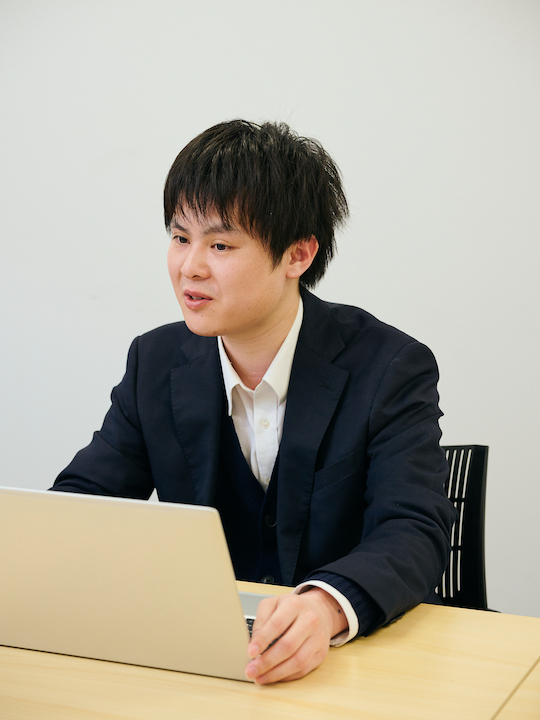
“A recent example is the Secure Account Region Restriction feature, which limits activity to specific regions to strengthen security and reduce costs,” Mr. Kurosu said. “We were never planning to use overseas regions, but the previous configuration technically allowed resources to be created outside the regions we managed, which was a constant concern for us. Being able to implement these restrictions through the Classmethod Members Portal in just a few clicks was very convenient.”
Cutting Deployment Costs and Resolving Nearly 400 Issues in Four Years
Working with Classmethod produced a number of tangible results. Among the results, flexible pricing and strategic service selection reduced both initial deployment and ongoing operational costs. Supported by the AWS Technical Advisor, the team resolved 390 technical issues between 2020 and 2024. Mr. Kurosu, who manages daily AWS operations, values the ability to access expert advice at any time.
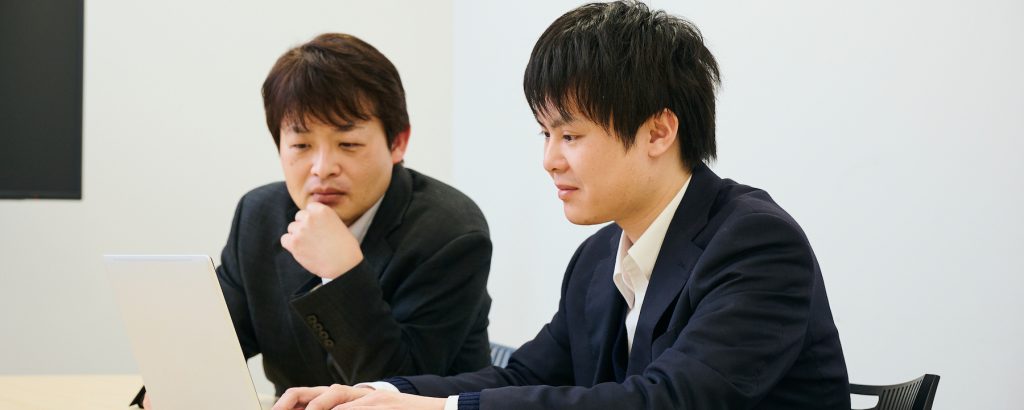
“No matter what I ask, they get back to me quickly, which is a huge help,” Mr. Kurosu said. “AWS has such a large market share that you can find all sorts of information out there, but then you have to figure out on your own whether it’s actually correct or right for your situation. When I bring something to Classmethod, they give us an objective take on how we should read the information and what we should do about it. That peace of mind is what allows us to operate AWS with confidence. What really stood out was that responses weren’t limited to written explanations — Classmethod would put together AWS architecture diagrams and other visuals to make the answer immediately clear.”
Expanding Cloud Adoption, Strengthening Security, and Raising Division-Wide Capability
As of 2025, about 80% of the company’s systems have been moved to the cloud. Once the migration is finished, they plan to start exploring cloud-native applications and new ways to put them to use. On the security front, the team is currently developing cloud operations guidelines tailored to the company’s own specifications, again using the Classmethod Cloud Guidebook as a reference.
As K’s Holdings pushes toward in-house development of its information systems, Mr. Iizuka said the company also wants to focus on hiring and training people who can work effectively in the AWS environment that is now standard.
“Looking across the division as a whole, we still have gaps in IT and DX knowledge,” Mr. Iizuka said. “I want to take what we’ve learned from Classmethod and spread it across the team, so that each person can think for themselves about what the cloud makes possible and act on it. That’s the kind of organisation-wide capability uplift I’m aiming for.”
Unlike on-premise environments, where mistakes can be difficult or impossible to reverse, the cloud allows for experimentation and iteration. K’s Holdings intends to put that to use by treating its AWS environment as a learning environment for the Systems Division as well.
Classmethod will continue to support K’s Holdings in its cloud journey going forward.