

Building a Secure Multi-Cloud Foundation for Generative AI Research
Date Published:18 JUNE 2026

- Google Cloud began as a trial, with limited governance and operating rules.
- Expanding generative AI usage increased security risks, including potential data leaks.
- Limited internal resources made it difficult to build an effective Google Cloud management framework.
- Differences between AWS and Google Cloud prevented the existing AWS manual from being reused as-is.

- Established a unified direction for Google Cloud operations through a new management manual.
- Defined a least-privilege IAM policy to reduce security risks.
- Improved accountability for security audits and risk assessments.
- Strengthened MTEC’s ability to demonstrate the value of its services to financial institution clients.
MTEC is accelerating the expansion of a multi-cloud foundation that incorporates Google Cloud alongside its long-standing AWS environment, broadening its options for generative AI. A primary challenge was establishing operating rules that would enable the company to use Google Cloud while maintaining appropriate security and governance.
With Classmethod’s support, MTEC developed a management manual that formalizes operational policies across security risk management, authentication and authorization, monitoring, and log management. This marked the first step toward building an environment where researchers can utilize generative AI securely and with confidence. We spoke with members of the Research Department who spearheaded this initiative.
Growing Demand for the Gemini API Drives Google Cloud Adoption
MTEC serves as a research institute and think tank within the Mitsubishi UFJ Trust Bank Group. Its core strengths lie in research, analysis, and advisory services that integrate financial expertise and theory with mathematical and information science. The institute also develops proprietary asset management models that help improve fund performance.
With the widespread adoption of generative AI, MTEC has begun applying these tools to its research activities. Building a digital foundation to empower researchers has consequently emerged as a strategic priority.
This initiative is led by the Data Service Group and the Development Group within MTEC’s Research Department. The Data Service Group oversees the data analytics platform and supports data utilization across the company. It works closely with the Development Group, which develops infrastructure and fulfills information systems function, to drive enterprise-wide generative AI adoption.
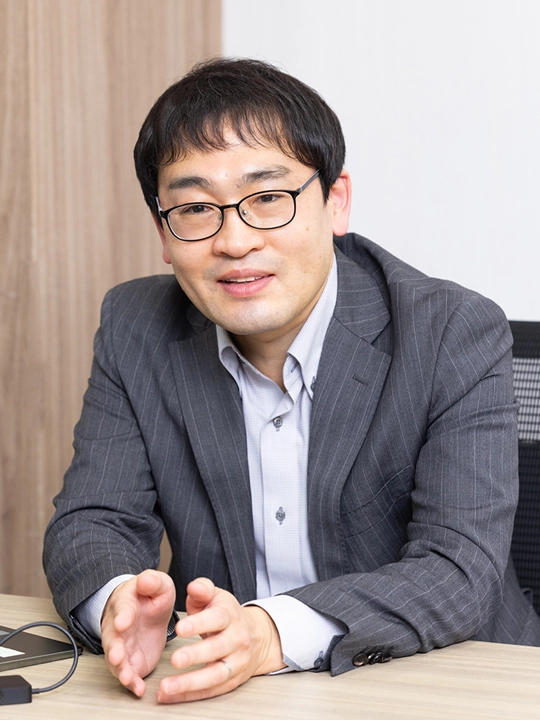
MTEC has also been accelerating its shift toward a multi-cloud architecture. “While AWS has historically been our primary cloud platform, interest in Google Cloud, particularly around Gemini and related AI services, has been growing,” said Mr. Tsuyoshi Okada, Senior Financial Engineer and Group Leader of the Data Service Group.
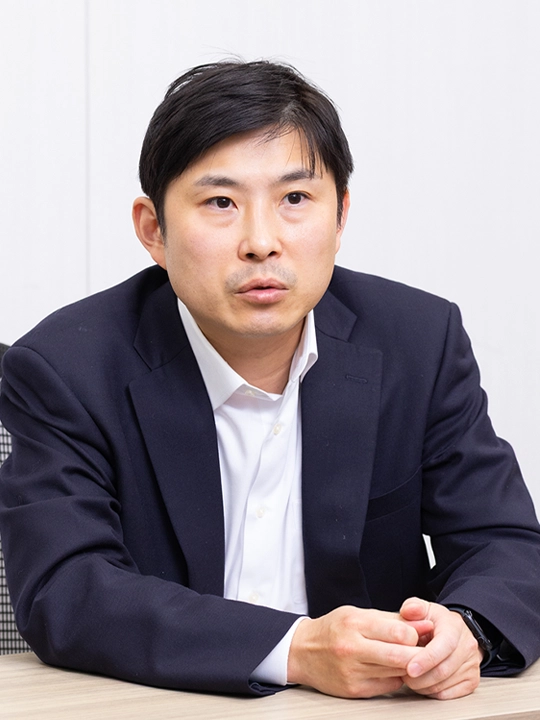
“Given that our primary cloud users are researchers, our use cases are diverse,” added Mr. Masashi Miyake, Financial Engineer in the Data Service Group. “Beyond advanced numerical calculations and large-scale data analysis using Python and R on AWS, we are increasingly using generative AI to analyze and organize unstructured data, including PDF documents containing publicly available information.”
MTEC began using Google Cloud around 2023. Initially introduced on a small scale as a trial, its use has expanded rapidly across the organization in response to growing demand for generative AI and the Gemini API.
“Gemini has become so widely adopted that the name comes up constantly during researchers’ project reporting sessions,” Mr. Okada said. “As a result, one of our key responsibilities is to deliver and maintain a foundation that enables researchers flexibly leverage the respective strengths of AWS and Google Cloud.”
Establishing Governance for Secure Google Cloud Use
Establishing a management manual to ensure the secure and appropriate use of Google Cloud became an urgent priority for MTEC.
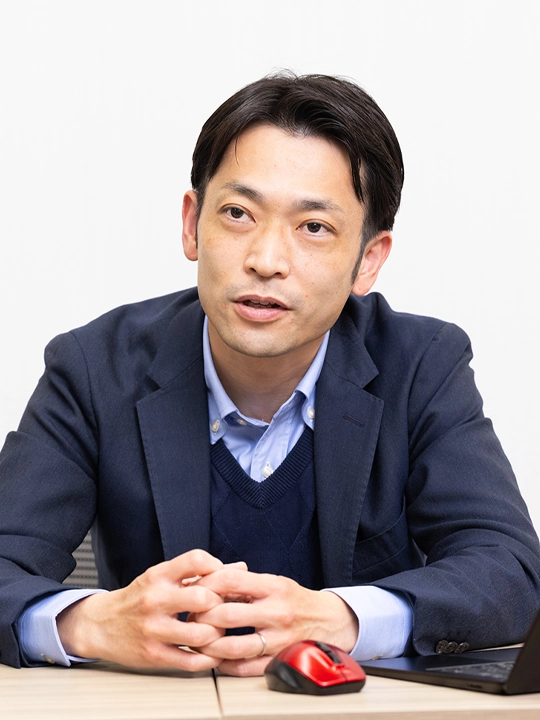
“As part of a financial institution, we are subject to strict security controls regarding cloud usage,” said Mr. Koji Okabayashi, Financial Engineer in the Development Group. “For AWS, which we have operated for many years, our operating rules and security standards were already well established. Google Cloud, by contrast, was initially introduced on a trial basis, and its governance framework has not yet been sufficiently developed. Scaling up usage without addressing this gap would increase security risks as user numbers grew, making it essential to bring Google Cloud’s security posture closer to that of AWS.”
However, limited internal resources made it difficult for MTEC to establish a Google Cloud management framework entirely from scratch. Although MTEC already had a management manual for AWS, the two platforms differ in their architectural philosophy and operating models. As a result, the existing AWS management policies could not simply be applied to Google Cloud.
MTEC selected Classmethod to support the development of its Google Cloud management manual.
“We had previously worked with Classmethod on AWS and Snowflake implementation projects,” Mr. Okada said. “Through these engagements, we came to highly value their technical expertise and reliability. Whenever we need support for cloud initiatives, Classmethod is always one of the first companies we think of.”
A decisive factor in MTEC’s selection was Classmethod’s prior support in developing its AWS management policies.
“We had already succeeded in building an AWS environment that our researchers find easy to use,” Mr. Okabayashi said. “Because Classmethod had supported us in establishing the related management policies, we were confident that working with them on the Google Cloud management manual would lead to equally strong results.”
Building Google Cloud Expertise Through Hands-On Support
The Google Cloud management manual project began in September 2025. Using MTEC’s existing AWS management manual as a reference baseline, Classmethod first drafted a proposed table of contents for the new manual. The team then systematically drafted each chapter, carefully accounting for the fundamental structural differences between AWS and Google Cloud.
“Working within our budget constraints, we requested Classmethod to focus on the essentials rather than produce overly elaborate deliverables,” Mr. Okada explained. “Their decision to summarize the key points in a wiki format worked very well for us. That foundation allowed us to transition into the next phase of applying the guidance to actual system design and configuration.”
As the project progressed, gaps in MTEC’s knowledge of Google Cloud also became apparent. Here, too, Classmethod’s support proved valuable.
“Whenever we encountered questions regarding Google Cloud-specific terminology or settings, Classmethod explained them by drawing direct parallels to similar AWS services,” Mr. Okabayashi said. “This helped us build our understanding of Google Cloud. They also took into account the rigorous security requirements of the financial sector, ensuring the project moved forward carefully in a way that suited our organization.”
Mr. Miyake shared a further example of this assistance: “For matters that required direct confirmation with the cloud provider, such as Vertex AI data retention policies, Classmethod proactively liaised with Google Cloud on our behalf to obtain answers, and helped resolve our questions.”
Clear Policies Strengthen Security and Governance
MTEC completed its Google Cloud management manual in January 2026. The manual covers four key domains: security and risk management, authentication and authorization, security monitoring, and log management. By configuring systems in accordance with the documented best practices, MTEC can maintain appropriate levels of security and governance across all configurations.
“The greatest benefit is that we now have a clear, unified policy for managing Google Cloud,” Mr. Miyake said. “Whether we are building a new application or making configuration changes, decisions no longer rely on individual judgment. We have a standard that we can consistently use as a baseline for decision-making.”
Because identity permissions are a primary risk vector in cloud environments, the project also gave MTEC an opportunity to clarify its Identity and Access Management (IAM) framework.
“This established a clear policy grounded in the principle of least privilege,” Mr. Okabayashi noted. “By enforcing the policy consistently, we expect to substantially reduce security risks. We have also engaged Classmethod to assist us with adjusting configurations across our existing systems to align with these guidelines. While implementation is ongoing, we believe that our security posture is now on par with industry peers.”
The initiative has also improved MTEC’s ability to demonstrate accountability to external stakeholders.
“We can now approach security risk assessments and audits with greater confidence,” Mr. Okada said. “We can also communicate more clearly to financial institutions offering similar analytics services that we maintain a secure environment in which they can safely entrust us with their data.”
Building an End-to-End Research Workflow with AI Agents
Efforts to apply the manual’s operational standards across MTEC’s remaining legacy systems are still underway. MTEC targets full implementation of these security configurations by the end of May 2026, which will solidify its enterprise Google Cloud foundation. Classmethod continues to provide implementation support for this phase.
Looking further ahead, MTEC aims to achieve deep integration of generative AI across its core research functions. As generative AI delivers increasing value across a wide range of tasks, MTEC is actively identifying ways to maximize its impact within its own research environment.
“Our goal is to build an end-to-end, multi-agent workflow, that spans everything from scanning academic literature and framing new research hypotheses to testing models and validating strategic advantages,” Mr. Okada said. “At present, our use of generative AI focuses on specific tasks, such as extracting data from PDF documents. Going forward, we will further refine how we select and combine generative AI services such as Gemini and Claude to significantly improve both research output and quality.”
Technical considerations remain, such as orchestrating generative AI services across multiple cloud environments. However, MTEC is actively refining its approach, including evaluating the use of autonomous agents. As the enthusiasm for AI tools among researchers continues to grow, MTEC intends to deepen its relationship with Classmethod to maintain a state-of-the-art research environment.