


Driving Software Development Toward an AI-Driven Future:
A Hands-On Program That Built Generative AI Skills and
Engineering Mindsets
Date Published: 27 FEBRUARY 2026

- Needed to strengthen software development capabilities and increase development speed
- Deployed generative AI tools, but usage was limited to only a group of developers
- Faced a deeply ingrained belief that manual coding was faster and more reliable
- Encountered resistance from mid-career staff wary of sudden AI integration into existing workflows

- Expanded AI coding agent usage beyond engineering departments to other business units
- Increased the number of non-engineers able to create UI/UX mockups independently
- Streamlined communication and accelerated decision-making between business units and engineers
- Drove a broader shift toward placing generative AI at the center of the software development lifecycle
MTI Ltd. has continued to grow by providing a wide range of digital services including its flagship women’s healthcare service, Luna Luna, which recently celebrated its 25th anniversary. To drive generative AI adoption across its software development organization, MTI partnered with Classmethod for their AI-Driven Development Hands-On Program. As a result of intensive learning through hands-on workshops, a significant transformation is now underway in the company’s software development structure. Mr. Shingo Nishikawa and Mr. Yuichi Hirano of the AI Engineering Department led this initiative and shared the details of their journey.
Falling Behind a Global Shift Toward AI-Driven Development
MTI provides digital services spanning healthcare, music and video streaming, weather and disaster preparedness, and entertainment. Founded in 1996, the company grew alongside the mobile content market and now operates across both consumer services and enterprise solutions.
Strengthening and accelerating software development has always been a core priority for MTI. While the company was an early adopter of GitHub Copilot, an AI coding assistant, usage remained confined to a small circle of engineers. Simply providing the tool was not enough to transform the organization’s broader development culture.
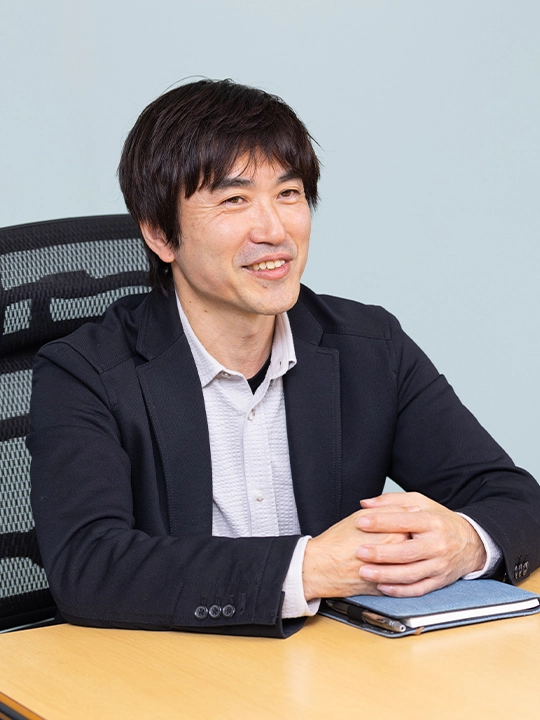
Mr. Shingo Nishikawa, an executive officer and head of the newly established AI Engineering Department within the Technology Division, grew concerned. He recognized that adoption needed to go much further.
In 2025, Mr. Nishikawa attended Microsoft Build, an overseas developer event and felt firsthand the rising global enthusiasm for AI-driven software development. His participation in Japan’s AI-Driven Development Conference solidified his belief that the industry had reached a genuine tipping point.
Having studied AI since university and witnessed several previous hype cycles, Mr. Nishikawa initially viewed the trend with skepticism. He recalls that he was wary of the noise surrounding AI, wondering “whether this was just another wave of marketing-driven hype.” The AI-Driven Development Conference changed his mind.
“If we as a company failed to keep pace with this shift,” Mr. Nishikawa said, “we risked being unable to adapt to a historic turning point and losing our competitive position in the market.”
Choosing the AI-Driven Development Hands-On Program to Shift Mindsets Company-Wide
MTI continued rolling out AI coding agents, including Devin, Claude Code, and Cursor. Simply adding tools, though, did not change people’s mindset about software development.
“Our engineers tend to be diligent and process-oriented rather than the type who casually experiment with new tools until they’ve mastered them,” says Mr. Nishikawa. “Given that culture, I realized that simply providing the tools and the environment would not be sufficient to trigger a real shift.”
With executive leadership also pressing for generative AI to improve development productivity, Mr. Nishikawa looked for something that could move reluctant developers. He chose the AI-Driven Development Hands-On Program from Classmethod, a practical training service for mastering trial-and-error techniques using generative AI technology, designed to cultivate a culture of innovation by learning and growing from failure.
While AI-driven development was still an exploratory concept across the industry as of 2025 and had not yet been strictly defined, Classmethod views it as a methodology that integrates generative AI tools and techniques into every phase of the software development lifecycle, including requirements definition, design, implementation, testing, and operations, to dramatically improve speed, quality, and efficiency.
At the core of the program sits a hands-on workshop where participants learn to use major AI coding agents by building with them. The curriculum covers GitHub Copilot Agent, Cursor, Devin, Claude Code, Cline, and other widely used tools, with content tailored to each company’s tools, participant skill levels, and backgrounds.
Of course, other providers also offer similar training services for generative AI tool adoption. So why did MTI choose Classmethod’s program?
“I had always associated Classmethod with AWS, but hearing their presentation at the conference changed that perception,” Mr. Nishikawa explained. “When a vendor has their own products, their training programs often have a bias toward those specific tools. What we wanted was practical knowledge taught from a neutral standpoint. Classmethod occupies that position in the best possible sense, teaching the concepts of major AI coding agents from a step back. I was confident their program would be valuable for us because it teaches the core concepts and the essentials of those major tools.”
Pairing Junior and Mid-Career Engineers to Smooth Adoption
MTI worked closely with Classmethod to tailor the program to the company’s situation. The company adopted the following approach for implementation.
“While younger employees were eager to embrace AI, mid-career engineers, who feel a strong responsibility for maintaining established workflows, tended to resist the sudden introduction of unfamiliar AI into their daily tasks,” Mr. Nishikawa explains. “To bridge this gap, we paired junior and mid-career staff to go through the program together.”
Younger engineers had been voicing frustration: they wanted to try new development methods but struggled to get approval. Mr. Nishikawa asked Classmethod to make the workshop a space for dialogue between the two groups.
Because much of the learning required experimentation, MTI also asked for an environment where participants could work through real problems on the spot. “It was a wide-ranging set of requests,” Mr. Nishikawa said, “but Classmethod delivered a workshop that aligned perfectly with our vision.”
Generative AI Usage in Production Projects Grows Steadily After Training
In this way, in August 2025, an intensive, full-day program was conducted. The program combined classroom sessions on AI-driven development trends and AI coding agents with hands-on workshops for practical application. The training specifically featured Claude Code, which MTI has adopted across the company.
Since the program’s implementation, steady changes have been observed in the company’s software development structure. Mr. Nishikawa highlighted the results, noting, “In actual new service development projects, teams are now actively using generative AI tools.”
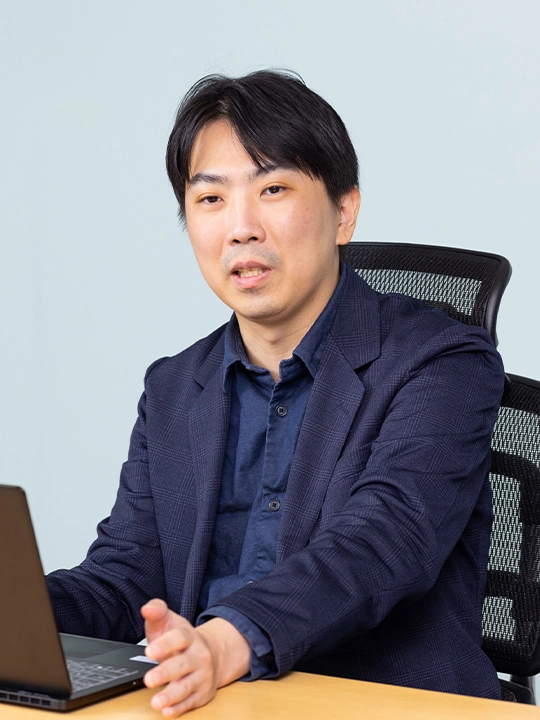
“The impact extended beyond the engineers as generative AI adoption is also spreading among staff from other business divisions.” Mr. Yuichi Hirano, a specialist in the AI Engineering Department, described what happened next: “Quite a few of the highly perceptive participants from the business units can now independently build UI/UX mockups. The preconception that software development tools are exclusively for engineers is beginning to dissolve. Now that anyone can quickly produce a working prototype, communication between business units and engineers at the requirements definition and basic design stages has become significantly more fluid, leading to faster, more confident decision-making.”
At this stage, the impact of AI coding agents cannot be measured solely by engineer productivity. Certainly, AI agents will help accelerate coding tasks, but in reality there are dependencies and constraints related to existing software assets, and adjustment work to maintain consistency is also necessary. It is not a matter of simply replacing some code.
MTI, however, places greater emphasis on this cross-functional adoption than on individual coding speed alone.
“When service owners try to explain a design concept verbally using PowerPoint slides, it can be hard to convey intent accurately,” Mr. Nishikawa said. “Generative AI changes that. Rapid prototyping lets teams share a concrete image from the earliest stages and turn ideas into something tangible.”
Reshaping the Entire Software Development Lifecycle
Within just six months of completing the Classmethod program, generative AI adoption at MTI has advanced significantly. The company sees the initiative as a work in progress.
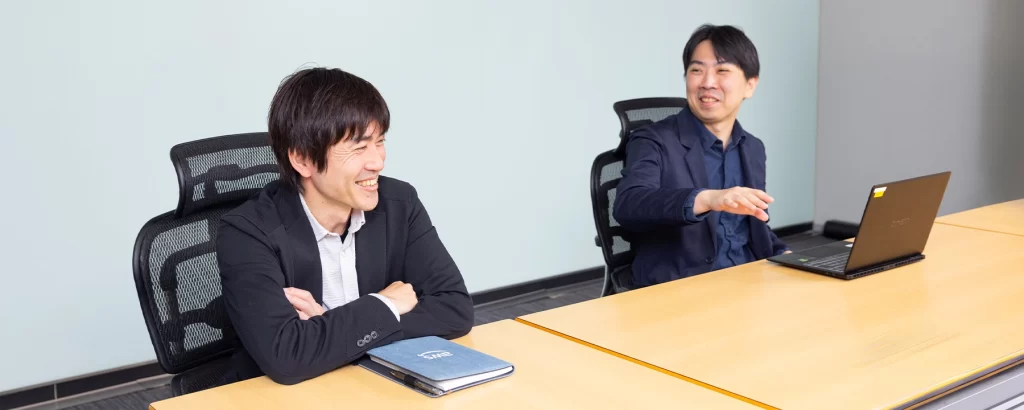
“Simply swapping out development tools changes nothing,” Mr. Nishikawa said. “We need to place generative AI at the center and reshape the software development lifecycle itself.” He is focused on optimizing the development structure across the entire organization.
“We want to expand enablement across departmental boundaries, build an organization where people use generative AI tools autonomously and foster a new corporate culture.” Mr. Hirano says, expressing his enthusiasm for the road ahead.
That shift will inevitably redefine the role of engineers who have traditionally been responsible for much of the software development process. “The era where an engineer’s job ended once they built exactly what the business unit requested is over,” Mr. Nishikawa asserts. “Engineers who cannot visualize the end user or the experience they are delivering will see their value steadily decline.” The imperative, he stressed, is for engineers to engage actively in upstream processes.
Through continuous trial and error, MTI continues to push forward with renewing its software development processes amid the new wave of AI-driven development.