

Over 50 Students Build Apps with Claude Code in Two Days: Classmethod Supports a Special Lecture at Kyushu University’s QREC
Date Published:25 AUGUST 2026

- Struggled to design a lecture that let students experience implementation rather than stopping at the concept stage
- Lacked practical exercises for connecting graduate students’ research seeds to real-world application
- Had no know-how for providing an AI development environment to a large group of students with and without a computing background

- Established an exercise environment where about 60 students could use Claude Code with nothing but a browser
- Enabled 80–90% of students to complete a prototype or landing page in two days
- Achieved a satisfaction score of 4.59 out of 5 in the post-course survey
- Reduced operational workload and costs through consolidated AWS billing and simple environment resets
In April 2026, the Robert T. Huang Entrepreneurship Center of Kyushu University (QREC) launched “Social Change Studio,” a two-day advanced lecture for graduate students. The theme was social issues and generative AI. As a partner company, Classmethod handled everything from building the exercise environment for Claude Code, an AI coding tool, to designing the lecture and supporting students on the day.
Why QREC Launched a Special Lecture on Social Issues and Generative AI
QREC at Kyushu University offers cross-disciplinary entrepreneurship education that is not confined to any particular faculty or department. It develops students’ ability to recognize social issues on their own, conceive solutions, and carry them through to implementation. The desire to bring this learning to more students was behind the decision to launch the special lecture.
Advances in generative AI have ushered in an era in which even people who are not engineers can use AI to turn their ideas into something tangible. Mr. Matsui, who was then at QREC and is now an associate professor in the Faculty of Commerce at Kansai University, envisioned a lecture in which students would use generative AI to take ideas for solving social issues all the way to implementation. After Mr. Matsui’s move, Mr. Kaneko of QREC took over, and the idea became “Social Change Studio,” a cross-departmental course for graduate students. It was offered as a special credit-bearing track open to a wide range of students, and about 60 enrolled, from information science students to working professionals attending business school.
“We wanted this lecture to increase the number of graduate students who take on the challenge of changing society,” says Mr. Kaneko. “By combining the specialized knowledge students have built through graduate studies and research with support from AI, we hoped that concrete services and products would emerge, and that this would give students a chance to start changing society.”
Choosing Classmethod for Its Proven Technical Ability to Set Up Claude Code for Over 50 Students
Kyushu University first took an interest in Classmethod through Classmethod’s IT talent development work with Hokkaido University. That initiative drew attention across the national university network, and Kyushu University reached out for a consultation. Through repeated discussions, the idea of a two-day joint special lecture on social issues and generative AI took shape.
Classmethod had previously provided all attendees of a Claude Code study session with a development environment accessible from a browser. Applying the same mechanism would make it possible to give university students, whose skill levels and devices vary widely, an identical development environment. Starting in February, Classmethod aligned the lecture outline with Kyushu University and decided to center the course on individual development exercises, in line with the instructors’ expectations.
The development exercises were based on the event design used in hackathons and similar events on Zenn, a service operated by Classmethod. Students were given opportunities to give each other feedback and to pitch. By having others see and try their products, students could feel the satisfaction of building something as they learned.
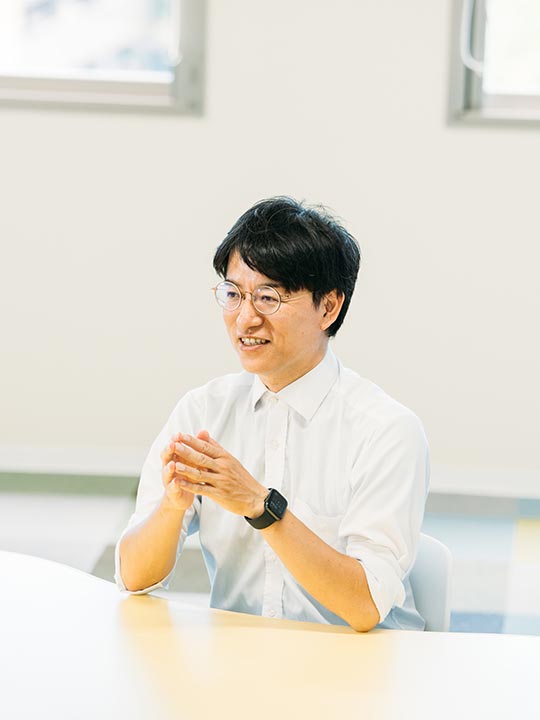
“In using AI in education, I felt that giving all students access to paid AI tools and setting up an environment where they could practice vibe coding would be far from easy,” says Mr. Kaneko. “However, in conversations with Classmethod, I learned that they had built a similar environment before, and I could begin to picture concretely how it would work in an educational setting. I was also concerned about whether students with different coding skills and fields of expertise could all make full use of AI in the same environment. Hearing that Classmethod’s engineers would provide one-on-one help to any student who got stuck put me at ease as I approached the lecture.”
Building a Browser-Based AWS Environment and Custom Claude Skills for the Lecture
The environment students used in the lecture was built on AWS. A browser-based version of VS Code (code-server) was launched for each student on a container service, and Claude, accessed through Amazon Bedrock, served as the AI model. Because students can start developing simply by opening a URL in a browser, the setup works across a wide range of PC specifications and operating systems. Model usage fees and instance fees are consolidated into a single AWS bill, which keeps payment simple for the university. After the lecture, the environment can be reset by simply deleting the instances, leaving no impact on students’ PCs.
On the first day, after Mr. Matsui’s lecture on discovering social issues and generating ideas, Classmethod explained the fundamentals of generative AI and how to use the Claude Code environment. On the second day, students worked on development exercises to implement their own ideas as prototypes. Here, the Claude Skills that Classmethod designed specifically for this lecture proved effective. As students answer the question “What do you want to build?”, Claude guides them step by step through the design, implementation, reflection, and presentation phases in an interactive flow. The flow was designed so that even students with no development experience could proceed without getting lost.
Some developments on the day exceeded expectations. During the morning session, 60–70% of students were already working with functioning screens, progressing faster than anticipated. During the lunch break, Classmethod built a new Skill for creating landing pages and added it as an option for the afternoon. As a result, 80–90% of students worked with this Skill, and nearly everyone completed a deliverable.
Engineers from Classmethod’s Fukuoka office also joined the classroom as tutors and resolved each student’s difficulties individually. Classmethod also used communication tools such as Discord as a point of contact and handled questions from about 60 students.
“Before the lecture began, there was some uncertainty about how far students with almost no coding knowledge could take a product through vibe coding,” says Mr. Kaneko. “In the lecture, however, every student was able to create their own prototype through dialogue with Claude Code, and I strongly felt that potential. At the same time, some students were unfamiliar with the tools and came to a halt, so the individual support from Classmethod’s engineers was a great help.”
80–90% of Students Completed Deliverables with Satisfaction at 4.59 out of 5
At the end of the second day, each student delivered a roughly two-minute pitch presenting their app or landing page. Students from diverse backgrounds produced deliverables reflecting a wide variety of ideas, resulting in an overall satisfaction rating of 4.59 out of 5 in the post-course survey. The free-text responses highlighted how even students unfamiliar with technology were surprised by how quickly they could develop an app, with comments such as “I can build the kind of app I imagine in surprisingly little time” and “I feel the barrier to prototyping has disappeared.” Furthermore, students noted that the experience helped them realize what matters most is human ideation and creativity, starting with the question, “What do I want to solve?” Ultimately, the learning extended far beyond simply mastering a tool.
Working professionals from the business school valued being able to quickly give shape to challenges they face in their daily work. Students from information science backgrounds most often said they wanted to keep using the tools after the lecture and apply them in their research. Through a Skill designed to ask how well students understand what they have built, the lecture also sent students home with a sense of personal responsibility for what they build in the age of generative AI.
“Through this lecture, I think the students gained a tangible sense, and a measure of confidence, that they might be able to give shape to their own ideas with AI,” says Mr. Kaneko. “I hope this experience becomes a first step toward bringing change to society.”
Taking the Next Step Toward Opening Research to Society
Building on this lecture, Kyushu University is organizing its plans for fiscal year 2027. To keep the lecture from being a one-off experience, the university is considering ideas such as a format in which students explore in greater depth how to apply generative AI to their own research topics, and a connection to QREC’s Student Initiative Programs.
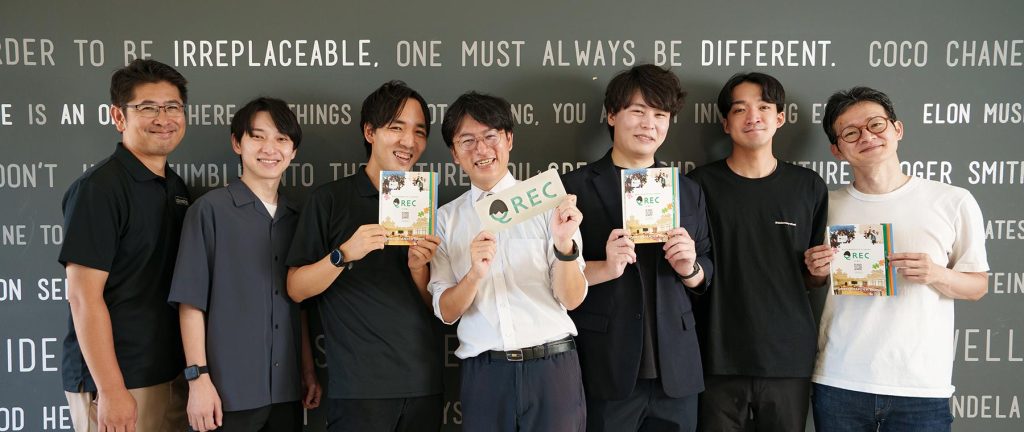
“Going forward, QREC wants to continue providing practical learning that leads to real-world implementation while making use of AI, a powerful tool,” says Mr. Kaneko. “Realizing this requires an educational environment where AI can be used. In addition to hardware such as infrastructure, building the soft side of the environment is just as important: how to engage with AI and use it appropriately. We hope Classmethod’s extensive experience and expertise with AI will help advance the use of AI in education, which is still developing.”
Drawing on the environment-building and curriculum-design expertise gained through this lecture, Classmethod will tailor its approach to each educational setting to broaden the base of AI talent development. It will also continue to support Kyushu University’s efforts to connect research with society.