

Driving Company-Wide AI Adoption with Claude Code and Cowork: One-Stop Support from Governance to Training
Date Published:28 AUGUST 2026

- Wanted to promote AI as a company but lacked a clear path forward
- Saw AI use remain limited to a subset of employees, with company-wide adoption still insufficient
- Ad-hoc governance driven by trial and error, lacking a systematic framework

- Built an environment in which more than 200 employees can use Claude Code and Claude Cowork safely
- Configured governance settings for Claude’s organizational plan in line with security requirements.
- Raised enthusiasm for AI use across the company through AI workshops
- Established Claude usage guidelines to support safe use by all employees
Vega corporation Co., Ltd., based in Fukuoka, operates e-commerce businesses, including its own furniture and interior brand, LOWYA. The company made the promotion of AI use part of its management policy and decided to adopt the AI agents, Claude Code and Claude Cowork. It asked Classmethod for technical support in preparation for company-wide rollout, including governance design, guideline development, and workshops.
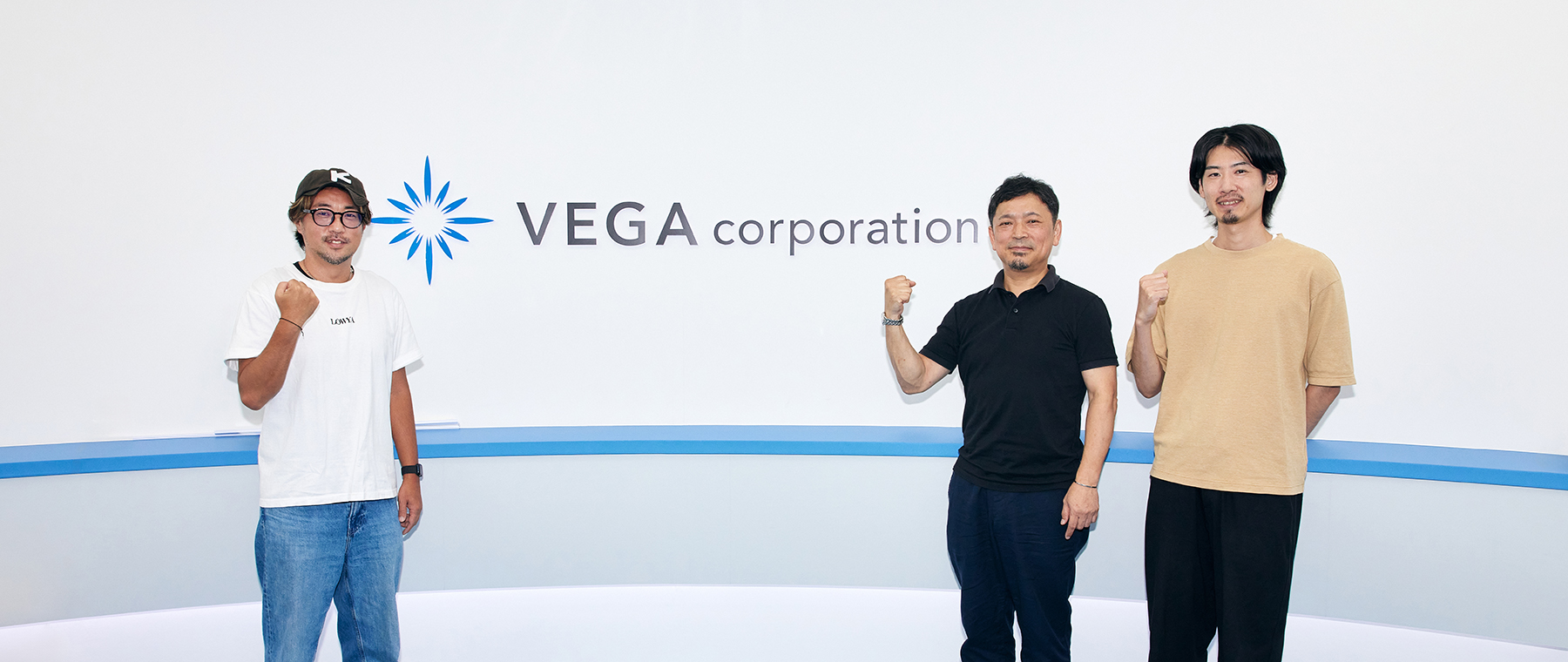
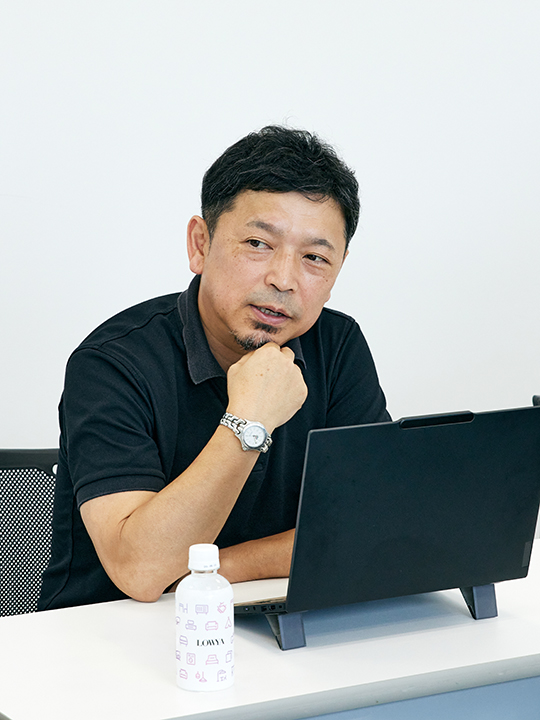
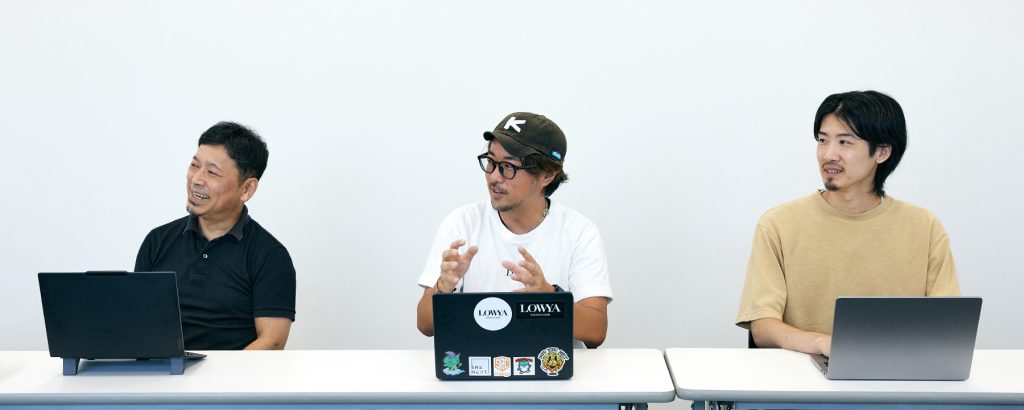
Mr. Ota, general manager of the Systems Division, Mr. Obara, head of the SRE Group, and Mr. Tanaka of the SRE Group shared their experience of the three-month project.
Management-Led AI Adoption: Choosing Claude Code and Claude Cowork.
Guided by its corporate vision of “Explore the endless possibilities of e-commerce”, Vega Corporation operates LOWYA, a furniture and interior e-commerce business, and DOKODEMO, a cross-border e-commerce platform business. LOWYA uses a D2C model in which the company handles everything from planning and manufacturing to sales, offering high-quality products at fair prices. In recent years, the company has also accelerated its expansion into physical stores and operates 17 stores nationwide as of July 2026.
Built around an in-house e-commerce system, the company enhances its services through IT and has also been proactive about AI. It began using Copilot and ChatGPT internally around 2023 and rolled out Gemini company-wide the following year, in 2024. In practice, however, use remained limited to a subset of employees and had not taken hold across the organization.
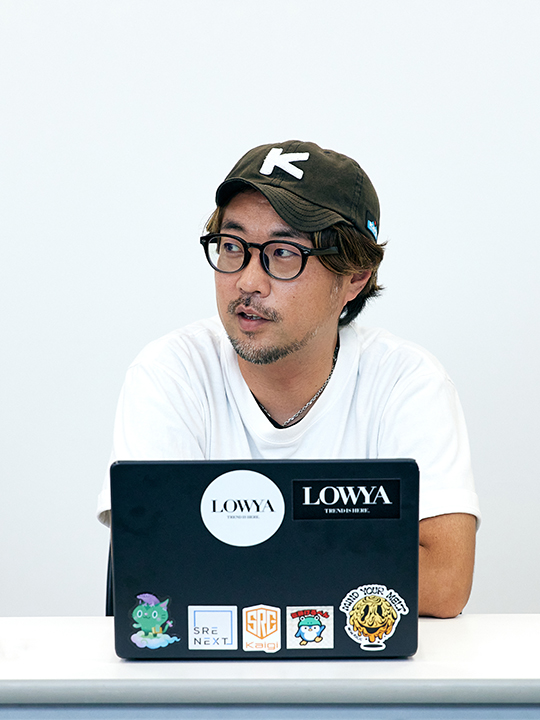
The turning point came at the company-wide employee meeting in April 2026. Mr. Ukishiro, the company’s president, announced a policy of leaving routine tasks to AI so that people can focus on higher-value work. This made clear that Vega Corporation would promote AI use under management leadership. In response, a project to roll out Claude Code and Claude Cowork company-wide, centered on the SRE Group, got under way.
“As we regularly gather a wide range of technical information, Claude was the one drawing the most attention,” Mr. Obara said. “Parts of our engineering organization were already using Claude Code, so we chose Claude Code as our coding tool and Claude Cowork as the AI agent for all employees.”
The first challenge in the company-wide rollout was governance. Until then, a person in the SRE Group had been building rules for generative AI use by trial and error, gathering information from the web. A company-wide deployment, however, required a more systematic approach. The company therefore asked Classmethod, a long-standing business partner, for technical support.
“We have worked with Classmethod since around 2021, through AWS billing services and a contract for Looker, a BI product, and we trusted them as a technical support partner,” Mr. Obara said. “When we heard that Classmethod had signed a reseller agreement with Anthropic, we consulted them right away.” (Reference: Classmethod press release)
A Project Built on Three Pillars: Governance, Guidelines, and Workshops
In April 2026, a project of approximately three months got under way to enable company-wide use of Claude Code and Claude Cowork. It was built on three pillars: governance design, guideline development, and workshops.
During the first month or so, the team settled the direction of the governance design, prepared the environment for Claude Code and Claude Cowork, and held study sessions and workshops for users. In the second half, they moved on to detailed governance work based on a parameter sheet.
1. Governance Design for the AI Environment
In designing governance, the team examined each item required for operations one by one, including SSO and SAML authentication settings, how to manage usage fees, and organization settings. Starting from the settings recommended by Classmethod, they adjusted them into the configuration best suited to the company’s own operating policies.
“The Classmethod team carefully explained the meaning, risks, and benefits of each setting so that we could understand the recommended configuration down to the details,” Mr. Obara said. “Because we were able to check even small questions as we went, we moved forward with confidence.”
The most carefully handled part of the governance design was coordination with the legal and security departments. As an e-commerce operator handling customer and product information, the company applied stricter settings in some areas.
“We decided to start with strict settings and expand the scope of use in stages while confirming safety,” Mr. Tanaka said. “We held many internal discussions about what to permit and where to draw the line at risk. For example, we limited the external destinations that the code execution environment can communicate with, and we managed the sites that the browser extension (Claude in Chrome) can connect to through an allowlist. By customizing the settings for our company in this way, we worked to achieve both governance and security.”
2. Creating the Claude Usage Guidelines
In June 2026, in the second half of the project, the company developed guidelines for rolling out Claude Code and Claude Cowork. These Claude-specific guidelines were derived from the generative AI usage guidelines the company had already established.
“Classmethod presented a draft of the Claude guidelines, and we reviewed it repeatedly in-house,” Mr. Tanaka said. “In the process, we also discussed whether to let anyone freely create Skills, which are bundles of instructions, or to set certain restrictions.”
The company does not intend to treat the guidelines as finished once written. Instead, it plans to review and improve them regularly as it puts them into practice.
“Security required careful discussion, but we were able to complete guidelines that reflect our own thinking within the deadline,” Mr. Obara said. “Building a foundation that we can grow as we operate was a major accomplishment.”
3. Claude Workshops
In late May 2026, after preparing materials, the company held workshops combining lectures and hands-on exercises, separately for engineers and for business departments. When the company opened applications to all employees, the number of people who wanted to attend far exceeded expectations. After final adjustments, more than 100 employees took part: approximately 80 in the Claude Cowork workshop (for non-engineers) and approximately 30 in the Claude Code workshop (for engineers).
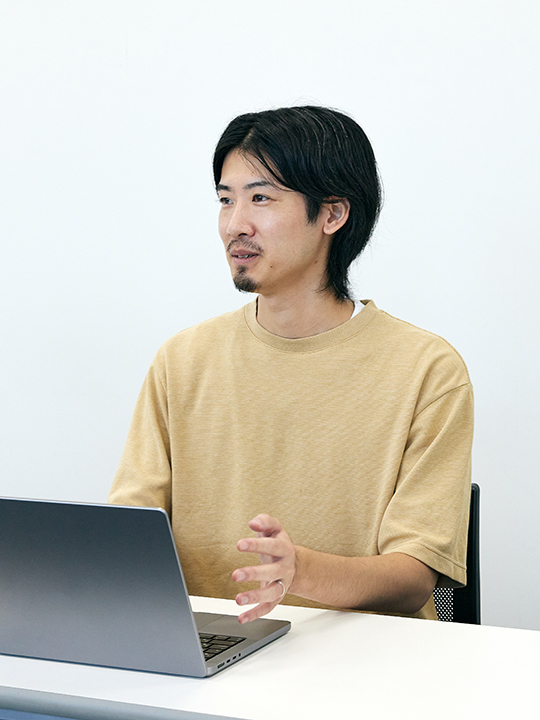
“Many employees were keen to make routine tasks more efficient, and people from almost every area volunteered, from administration to product planning, supply chain, retail, and sales,” Mr. Ota said. “That shows how high expectations were.”
The workshops were held four times in total, twice each for Claude Code and Claude Cowork. The first session combined lectures and hands-on work to learn basic usage and applications. In the second, participants worked on actual business challenges they had brought in advance, exploring ways to improve them using AI.
“Because it was a hands-on format in which everyone tackled their own work challenges with AI, the workshops helped people picture concretely how to use AI,” Mr. Obara said. “In the post-event survey, we received more than 80 responses, with an average satisfaction score of 4.22 out of 5, which is a high rating. Moreover, approximately 80% of respondents said they want to keep using Claude Code and Claude Cowork, so we were able to raise enthusiasm for AI use considerably.”
Appreciation for Classmethod’s Proposals and Hands-On Support
Looking back on the project, Mr. Ota, Mr. Obara, and Mr. Tanaka all pointed to Classmethod’s strength in making proposals and its commitment to supporting the company side by side. Mr. Obara recalled that Classmethod understood the company’s requests very well and responded very quickly.
“They responded accurately to technical requirements for the admin console and login,” Mr. Obara said. “They are also well versed in the latest developments in Anthropic’s products, and their proposals, which drew on extensive expertise in guideline development and security advice, were very helpful.”
Mr. Tanaka, who handled the hands-on work, said the team could not have moved this quickly on its own.
“Classmethod showed us the direction for the whole project by providing materials for the study sessions, a way to run the workshops, and a draft of the usage guidelines, so we could carry out the work with confidence,” Mr. Tanaka said. “Their responses to technical questions were also quick, and it was reassuring to be able to consult them right away whenever we were stuck.”
Mr. Ota, who oversaw the entire project, valued the long-standing relationship of trust.
“We have a long relationship with Classmethod, and they were a partner we could consult with peace of mind,” Mr. Ota said. “If we had tried to move forward on our own, it would have been difficult to secure staff resources. The project plan that Classmethod first presented was excellent, and it gave us confidence that we could proceed with this structure. Their progress and issue management were also thorough, so it was always clear what the issues were and what to do next. As for the workshops with more than 100 participants, they were run with attention to each individual participant, and I believe we achieved better results than we expected.”
Establishing a Governance Framework and Guidelines to Reduce Operational Risk
Through the three-month project, the company established a governance framework and guidelines for company-wide use of Claude Code and Claude Cowork. This reduced operational risk while accelerating the use of AI. After the project ended, the company introduced a mechanism to visualize usage and costs and began full-scale operation.
“Currently, 103 of our 277 employees, or roughly one-third, are using Claude Code or Claude Cowork (as of July 2026),” Mr. Obara said. “Quantitative measurement of the effects is still to come, but changes are already appearing on the front lines. The response has been especially strong from the business departments using Claude Cowork. Through the study sessions and workshops, the psychological barriers of ‘AI seems difficult’ and ‘it feels vaguely scary’ have come down, and use has accelerated all at once. It is only a subjective impression, but I feel it has shortened the time needed to produce work output and improved the quality of the data and charts we share internally.”
In the engineering department, development teams are also actively using Claude Code for design and implementation, which is improving development efficiency.
“We are starting to settle into a way of working in which humans handle specification writing and decision-making, and Claude Code handles implementation,” Mr. Tanaka said. “In some cases, a mockup that used to take about five days was finished in less than one day. I also use Claude Code and Claude Cowork in my own SRE work, and I can now detect signs that people tend to overlook.”
Continuing to Build the Environment and Expand the User Base for Company-Wide Rollout
With Classmethod’s technical support, the company has committed to full-scale use of Claude Code and Claude Cowork, but it sees itself as having only just reached the starting line. Going forward, it intends to continue building the environment for company-wide rollout and to expand the number of target users.
“As the first step toward the AI policy set by management, I think we got off to a very good start,” Mr. Ota said. “But the real test starts now. What matters is how to make the guidelines take hold, how to increase the number of users, and how to quantify the results, and that is where the Systems Division has to show what it can do. There are many challenges in getting AI use to take root and connect to business value. We expect Classmethod, as a partner running alongside us, to provide broad support, including operations and governance.”
Opportunities for AI use continue to grow, including deeper integration with external services such as MCP servers and connectors, within an environment built for safe use.
“Anthropic’s products are updated very quickly, so we hope Classmethod will continue to support us side by side,” Mr. Obara said. “That includes catching up on new features, sharing ways to use them and examples from other companies, and holding study sessions.”
Vega Corporation’s use of AI is expanding into a company-wide initiative following the governance design and guideline development, and Classmethod will continue to support its efforts.